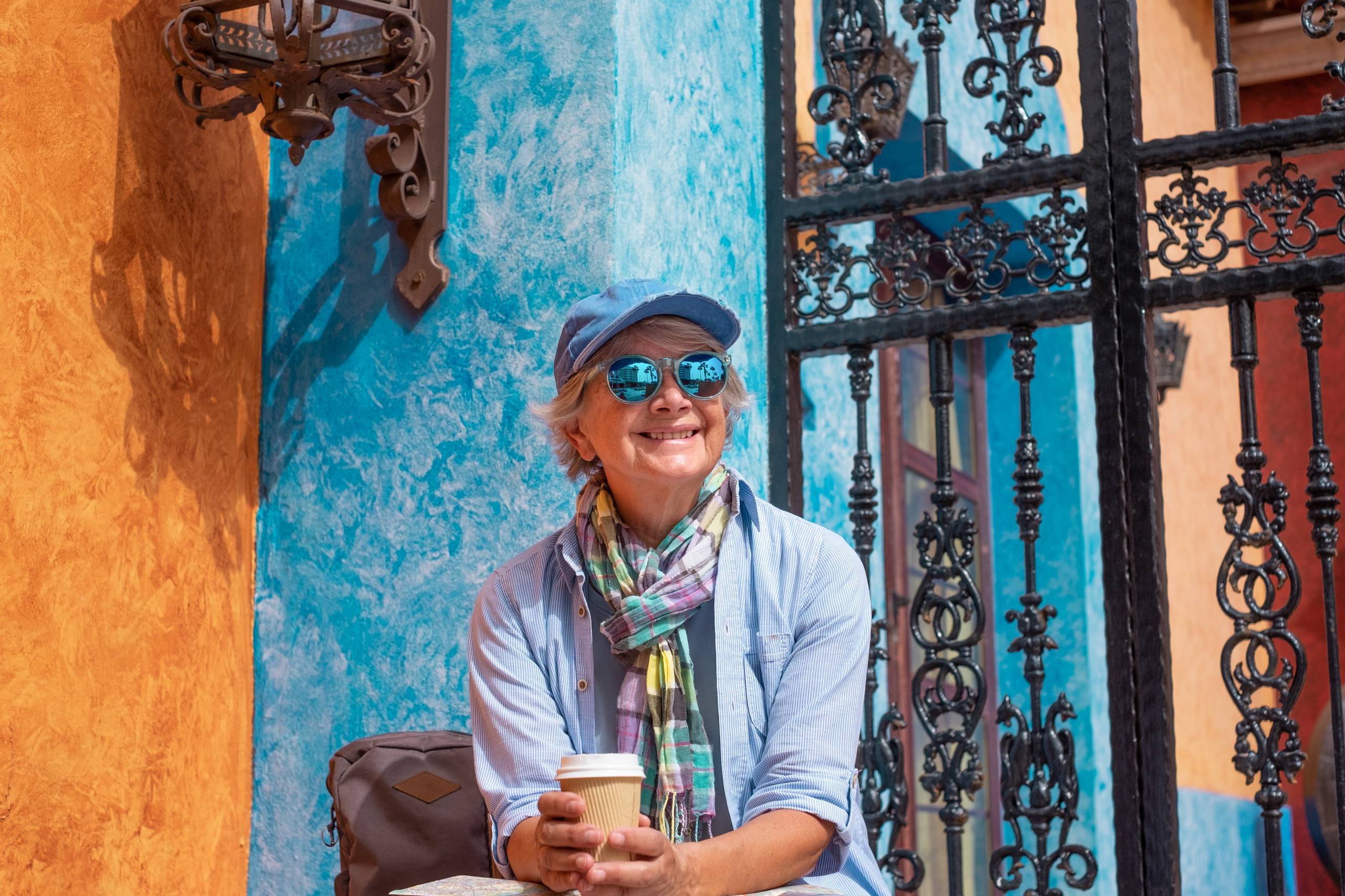
As an independent traveler, you don’t rely on the structure of a group tour. But that doesn’t mean you have no structure at all. Rather, the framework you work within is an internal one. It’s made up of your time constraints, budget considerations, interests, and comfort level with risk and uncertainty. Whether you’re aware of it or not, these factors guide your decisions and shape your experiences as you travel.
People talk about solo travel as liberating, but it’s actually designing. For those of us who don’t lean on someone else’s blueprints, it requires having your own blueprints on hand. A framework for decision-making, for self-soothing, for being able to disentangle your preconceptions from the facts of an unfamiliar place. Not having a travel buddy or an agenda doesn’t mean you have fewer questions to sort out — it means you have more. The difference between a nourishing trip and an exhausting one is less about bravery and more about a sense of safety in the midst of change.
We think that when solo travellers are new, they mistake independence for being alone. When you don’t have anything to gauge things against, every decision becomes weighty. What to do next, whether to take a break or if that odd feeling is right. The question is: how do I make this decision? We go back to overplanning or seeking information. Independence means you have come to the point where planning becomes trust in yourself. It is not overconfidence, it’s just knowing your own process when you’re unsure. It’s doing the work ahead of time and refining your decision making process as you go.
When done correctly, solo travel can convert the existential threat of the unknown into a data stream. A flight is delayed, a bus is missed, a linguistic blunder is made: these are not moral defeats but merely feedback. They encourage the traveler to suspend judgment, survey her surroundings, and reassess her options before acting. All this means that the solo journey, done properly, is less likely to be truly anxiety-provoking than the group one. It also means that the solo traveler is more likely to notice her thoughts.
The same applies to your relationship to time. When travelling solo you will not be subjected to anyone else’s routine. Either this will be liberating or will mean you lose all sense of time. If you travel well alone you will know how to structure your day – how to keep moving and how to sit still. You will understand the value of motion and the value of rest. This is another skill that can be translated into other situations.
At its core, independent travel is not so much about the places we go as it is about the stories we tell ourselves. The act of making decisions, and making more and more minute decisions, reminds us that we are the creators of our circumstances. Traveling alone, we can experiment with our models of reality to see what serves us and what doesn’t. The more we travel alone, the less we will fear the unknown, not because we won’t find ourselves in challenging situations but because we will become better equipped to navigate them. In short, traveling alone is a method of cultivating self-reliance and practicing how to stay grounded in new and foreign environments.